 magnon@magnon.es


Magnon Green Energy advances its industrial investment plans for Mérida with a renewable fuels project targeting 300,000 tonnes a year
- The opening of the public consultation period marks a further step in the project’s environmental permitting process towards a substantial modification of its integrated environmental authorisation (AAI).
- The initiative forms part of the development of a renewable fuels hub that the company is pursuing across its energy facilities in Mérida, Huelva and Puertollano.
- The project envisages using biogenic CO₂ from the Extremadura facility to produce carbon-neutral fuels and help decarbonise sectors that are difficult to electrify.
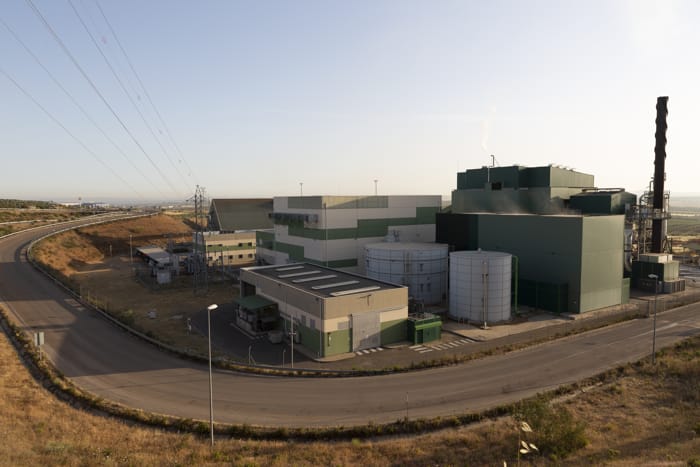
Magnon Green Energy, the Ence Group’s renewable energy subsidiary, is advancing its renewable fuels project in Mérida following the opening of the public consultation period by the Regional Government of Extremadura. This step forms part of the procedure to secure a modification of the existing integrated environmental authorisation and reflects the company’s commitment to developing a renewable fuels production hub.
The initiative envisages a production capacity of approximately 300,000 tonnes of sustainable fuels a year. To achieve this, it includes plans for biogenic CO₂ capture and liquefaction facilities, alongside renewable hydrogen production facilities.
This development would introduce a new industrial activity at the site, which will continue to generate renewable electricity from biomass. The aim is to establish the Mérida facility as a leading centre for renewable fuels production, drawing on its existing infrastructure and using biogenic CO₂ as a valuable feedstock.
A platform with projects across three sites
The Mérida project, which envisages creating 85 direct jobs during operation, joins the initiatives Magnon is developing in Huelva and Puertollano.
Through these projects, the company aims to draw on its industrial sites and its experience in generating renewable energy from biomass to develop new value chains linked to the energy transition.
Decarbonising transport
The Ence Group produces more than four million tonnes of biogenic CO₂ a year, positioning it as a significant player in the development of solutions involving renewable fuels and sustainable aviation fuel (SAF).
The commitment to SAF is becoming increasingly important against a backdrop of geostrategic tensions, driven both by European regulatory targets, including ReFuelEU Aviation, and by the need to reduce dependence on fossil fuels.
In this context, using local, circular resources such as biogenic CO₂ is emerging as one of the key pathways towards decarbonising air transport and strengthening security of energy supply. Developing this approach will enable some fossil-based kerosene consumption to be replaced with renewable fuels produced from local, circular resources such as biomass.
En este contexto, el aprovechamiento de recursos locales y circulares, como el CO₂ biogénico, se perfila como una de las vías clave para avanzar en la descarbonización del transporte aéreo y reforzar la seguridad de suministro energético. Su desarrollo permitirá sustituir parte del consumo de queroseno fósil por combustibles renovables producidos a partir de recursos locales y circulares como la biomasa.
Related news
- Guillermo Negro Appointed President of APPA Biomasa for the Next Four Years
- Schneider Electric and Magnon Drive Efficiency and Sustainability at the Mérida Biomass Plant, a Key Asset for the Energy Transition, with APC Technology
- Las celulosas especiales consolidan su peso en Ence: alcanzan el 32% de las ventas de Celulosa en el primer semestre de 2025, en ruta hacia el 60% en 2028